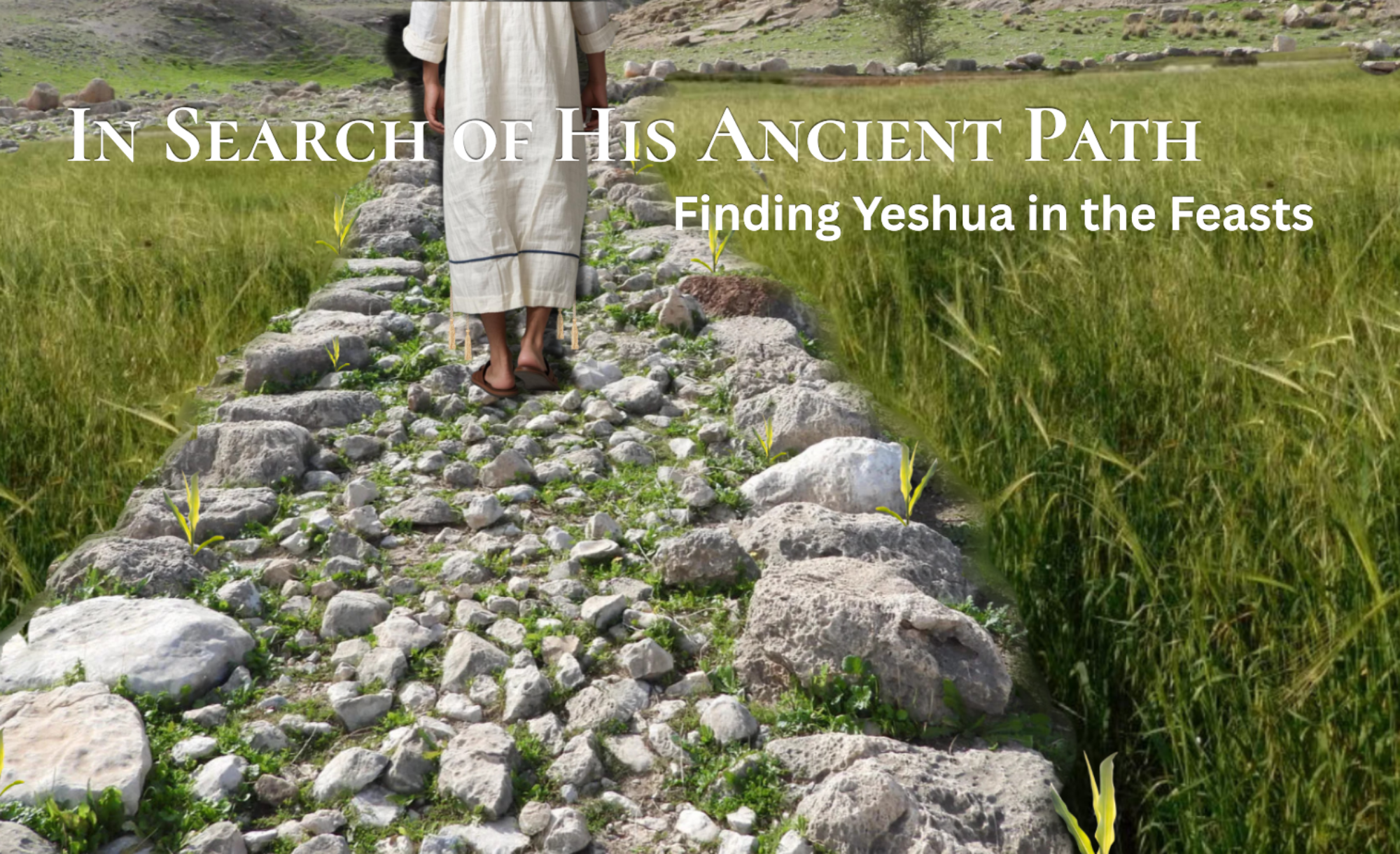
Updated: What a year of growth and increased understanding we all have had! Isnât Elohim glorious and gracious?! Iâve fine-tuned this statement due to our new understanding through our land experiences. Here are the amended guidelines that I use when inspecting the wild barley.
For those of you new to this group I’m going to keep this post pinned so you can understand my criteria for determining the turn of the year and you will have this as a reference to look back to.
As I have grown in my understanding, I have realized that the Biblical calendar is much more than just the barley. It is essential to know when the barley is in an acceptable condition to make a flour offering on Wave Sheaf, but and, equally, as important the other six species must also fall in their appointed timing. The Biblical calendar is made up of the seven species mentioned in Deuteronomy 8:8. So, itâs not *just* about the barley rather itâs about the perfect timing of all seven of the species. Each species should ripen a firstfruit in the season of its prophetic placement in the Biblical calendarâ¦. This is the part that we are all still learning so we MUST listen and follow the voice of the Ruach humbly and prayerfully as we grow together in the renewed knowledge that is being given from heaven.
***7 **For the Lord thy God bringeth thee into a good land, a land of brooks of water, of fountains and depths that spring out of valleys and hills; **8 **A land of wheat, and barley, and vines, and fig trees, and pomegranates; a land of oil olive, and honey;**9 **A land wherein thou shalt eat bread without scarceness, thou shalt not lack any thing in it; a land whose stones are iron, and out of whose hills thou mayest dig brass. Deuteronomy 8:7-9*
I inspect the wild barley and the other six species so that my household can have the correct Biblical calendar to worship the Elohim. Because I live in Israel if I didn’t honor and respect His calendar by inspection of the seven species and being aware of what their timing was what a DISHONOR that would be to HIM! Since there are so many people that are hungry to know these things but do not live in Israel, I share my observations and determination. You may have a different opinion than mine, thatâs ok, then use the information that I give you to worship Elohim the way that YOU understand the scripture say to do so.
I only use** wild barley and wheat, the unattended grapes, fig, pomegranates, olive, and dates** because Deut 11:8-17 tells us the Elohim is the gardener that plants, tends, and waters this land. Domestic crops can be manipulated by man to ripen outside of Elohimâs cycles and timing that create His days of worship.
***10 **For the land, whither thou goest in to possess it, is **not** as the land of Egypt, from whence ye came out, where thou sowedst thy seed, and wateredst it with thy foot, as a garden of herbs:*
***11 **But the land, whither ye go to possess it, is a land of hills and valleys, and drinketh water of the rain of heaven: **12 **A land which the Lord thy God careth for*: *the eyes of the Lord thy God are always upon it, from the beginning of the year even unto the end of the year. Deut 11:10-11*
Because the Messiah is the âfirstborn from the deadâ and the âfirstfruits of them that sleepâ. Because He rose on wave sheaf day, I personally do not need the barley to be in green dough stage (green ear) until about **three days before the yearly wave sheaf date**. I do **NOT** need the barley and a new moon to be ready together at the same **moment. **In my understanding, Wave Sheaf will always be on Sunday after the Saturday Shabbat during the week of Unleavened. Not only because the word Sabbath in the verse that tells us aboutâ Wave sheaf (Lev 23) is also the same word for the weekly Shabbat, but, because of WHO it represents and how it fits His patterns and cycles perfectly.
*And he is the head of the body, the church: who is the beginning, the firstborn from the dead; that in all things he might have the preeminence. Colossian 1:18*
*20 But now is Christ risen from the dead, and become the firstfruits of them that slept 1 Corinthians 15:20*
*10 Speak unto the children of Israel, and say unto them, When ye be come into the land which I give unto you, and shall reap the harvest thereof, then ye shall bring a sheaf of the firstfruits of your harvest unto the priest: 11 And he shall wave the sheaf before the Lord, to be accepted for you: on the morrow after the sabbath (weekly sabbath) the priest shall wave it. Lev 23:10-11*
I do not use the term âunleavened breadâ in reference to the seven days of Matzot. The word âbreadâ was added to the scripture by the King James translators. My household eats unleavened barley cakes for the week of Unleavened (which is Matzot in Hebrew) just as the Israelites did when they left Egypt.
And they baked *unleavened cakes *of the dough which they brought forth out of Egypt, for it was not leavened; because they were thrust out of Egypt, and could not tarry, neither had they prepared for themselves any victual. Exodus 12:39
I recognize and talk about the development of the land (plants, domestic and migratory animals) as sign of the approaching turn of the year but!!! the only sign of the turn of the year that we are given is in the bible is the **sign of barley being in the agricultural condition called Aviv in Hebrew, green ears in Anglo Saxon English, or a medium dough stage is the term I use**. These other signs from the land you will hear me talk about are just the minute hand on the celestial clock that is moving towards the barley hour.
What I mean when I say medium dough: The grain is full of starch. There isnât any liquid left inside of the grain. You might be able to squeeze some of the starch out if you divide the grain but not all of it. You can still divide the grain with your fingernail. The grain is green and not tan.
The scriptures tell us that the barley must be in the minimal condition called aviv or abib to qualify as an offering at the time of the Wave Sheaf date. The wave sheaf offering for the Temple was a measurement amount called an omer. The omer was to be made of barley flour or meal topped with olive oil and frankincense. So, the stage of the development of the condition called Aviv (which is a Hebrew word) needs to be able to produce a barley meal or flour.
My experience in the field has given me a different point of view than many of the other barley inspectors when it comes to the term aviv or abib that they all use. When I approach the wild barley, I understand that a single field of barley will never be perfectly ripe in unison. I remember that a firstfruit offering to Elohim was required BEFORE any of the other parts of the field could be harvested and that every grain of barley in the field that ripened after the firstfruits was precious because it fed a family for an entire year. I consider the primitive hand sickles that were used and if the quickly ripening barley grains could withstand the violence of the sickle at harvest time. If the barley is too ripe the percussion of the sickleâs cut will cause the barley head to shed its grains to the earth and the harvest will be partially, or fully lost. Therefore, I inspect for wild barley in **medium dough condition**. In medium dough the barley will not drop its grains. In medium dough I know in three days of drying at room temperature that the harvested barley on the stalk will make flour when roasted. At the medium dough stage, the highest yield of harvested barley grains will be achieved for the precious food and will make a firstfruits offering of roasted grain and then flour. This is where it really helps to understand how many months of the year Israel will not see plant growth according to Deut 11 because there is no rain in Israel after Shavuot or Pentecost. Nothing grows from the land now or then without water being added from vessels carried to the location. The stored grains were vital for survival during the dry months.
Each every, wild barley head does not ripen evenly. The top grains ripen first and will drop away first. The barley head will continue to ripen in a downward manner until all of the barley grains have seeded itself back into the earth. By harvesting the heads of barley in the medium dough stage and allowing the grains to cure over the three days up until the day of Wave Sheaf the harvested barley will make flour. Why three days? Obviously, I base it on the three days that Yeshua, the firstfruits, was harvested or cut off from life and in the grave before he rose on Wave Sheaf. Amazingly we did prove this theory with the barley grains being acceptable in three days from harvest if taken in the medium dough stage of development.
We now know, an entire field does not ripen evenly, and a single head of barley does not ripen evenly.
This is the same condition of green grains is what I look for in the wild wheat as the calendar approaches Shavuot. Medium dough wild wheat will respond exactly as the barley did and ripen in three days.
I **ONLY **report details on the wild barley that reflects the condition that I believe the scriptures tell us to use to determine the Biblical calendar. I don’t report about J’lem and the areas around the temple…these are hot zones. The barley there is on super-heated patches of earth locked inside of concrete jungles. These areas do not ripen without the influence of the extra heat of the city. I don’t report about domestic barley crops…domestic barley crops are manipulated with fertilizers and watering, they have been bred to not shed their grains as quickly as the wild barley, so they do not reflect the timing of Elohim. And I don’t report outside of what I believe the scripture requires because it causes confusion for those new to Torah. Has anyone here been connected with the Annual Body Barley Wars in the other group? Half of this bickering is because of too much information from those trying to provide a service for EVERYONE’s beliefs. The babes on milk become confused and others that have the appearance of maturity partake in debates, fits of anger, and divisions.
Finally, since I am a perpetual student of this Land with a Torah in my hand. My beliefs have in the past changed as I’ve read Torah and listened to the Land and the Ruach that blows across it. My beliefs changed a lot in the last two years, and they were fruitful changes. Could my perspective change again? Yep! And I’ll let you know if it does
I didnât create this group as a platform for everyone to share what they believe. I don’t mean that disrespectfully. I love sharing with you all but I won’t debate you unless you are standing beside me in a field of wild barley with the Word in your hands….Much Shalom, BeccaUpdated Feb 29, 2020, 10:13 AM