 Julia making sure his Passover food prep only included the most biblically clean ingredients, lolJulia making sure his Passover food prep only included the most biblically clean ingredients, lolUpdated Mar 30, 2018, 11:45 AM
Mar 30, 2018, 9:12 AM – Becca Biderman posted in In search of His ancient and true path …from cover to cover.
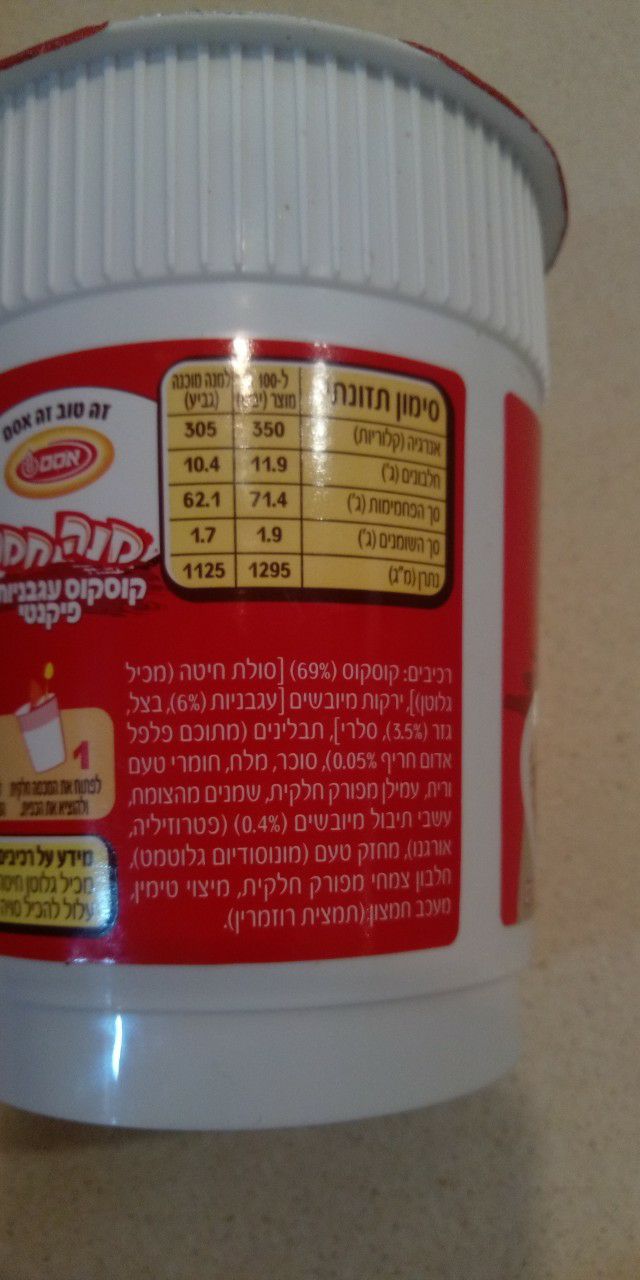 Last minute label reading. The hardest part for me is the amount of time I spend reading Hebrew labels….but! It must be done!Last minute label reading. The hardest part for me is the amount of time I spend reading Hebrew labels….but! It must be done!Updated Mar 30, 2018, 9:12 AM
Mar 30, 2018, 7:43 AM – Becca Biderman shared a memory to the group: In search of His ancient and true path …from cover to cover.
6 Years AgoDry Bones added a new photo.Updated Mar 30, 2018, 11:53 AM
Mar 29, 2018, 7:13 PM – Becca Biderman shared a post to the group: In search of His ancient and true path …from cover to cover.
Updated Mar 29, 2018, 7:13 PM
Mar 29, 2018, 6:26 PM – Becca Biderman shared a post to the group: In search of His ancient and true path …from cover to cover.
Updated Mar 29, 2018, 6:26 PM
Mar 29, 2018, 3:27 PM – Becca Biderman shared a post to the group: In search of His ancient and true path …from cover to cover.
Updated Mar 29, 2018, 3:27 PM
Mar 29, 2018, 3:13 PM – Becca Biderman posted in In search of His ancient and true path …from cover to cover.
 I had always observed Passover on the night of the 15th. I believed that the 14th was only mentioned as a preparation day.
Last year I became unsure of what I had been doing. This year I believe I have received clarity on which was the intended day for the Passover Sacrifice.
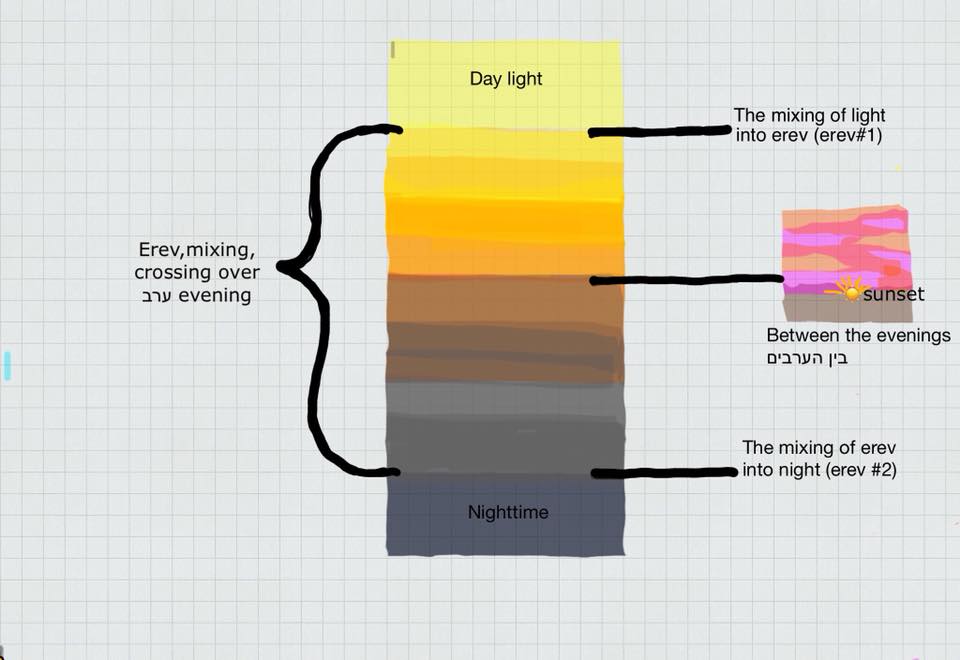
Between the evenings
Some of you have been in the group from the beginning. And youâve been through a couple of Passover seasons with me. It because of you who have known what Iâve done in the past that I post this change in my schedule regarding how I will keep the Passover and the week of Unleavened Bread this year.
I have a new understanding of âbetween the eveningsâ after finishing Hebrew language classes (ulpan). Last year it didnât click for me, it was probably too soon after finishing the class and I needed to settle in with the ebb and flow of my surrounding a little more. But Iâve have been able to use the skills Iâve learned with Biblical Hebrew as well not just in the supermarket. It is what helped me understand the term âbetween the eveningsâ.
××× ×ער××× â Between the evenings
Hebrew names are nouns, but they are also adjectives because the noun describes something about the person or place. Here are some examples:
Elijah or ××××× is a compound of the words El or God and Yehovah ××××
Naomi or × ×¢×× means pleasant, which is why she said to call her Mara (bitter) in Ruth 1:20
Yashua or ×ש××¢ means Yah Saves.
We could continue to build our list but you get the point.
Here is also an example of how words are built from a root word or parent word.
The word for bread is ××× and the word for war is ××××. When a root word is preceded by an × it indicates the prefix âfromâ. War takes âfrom breadâ because all the men, the farmers, the bread producers go off to war. Itâs a biblical theme that wars were fought in the first month of the year, which is the month of the aviv barley. Since barley was the principle bread in ancient Israel and the harvest begins in the first month, it is easy to see why the word for war means âfrom breadâ ××××.
Another example is the word guard ש×ר. The temple priests were considered to be guardians of the temple of ××××. They were responsible to keep the lamp lit, to offer the twice-daily incense, and the twice-daily sacrifices. They guarded the work of the temple. In Chronicles when we read about the priestly courses, the divisions of the priestly work; the Hebrew word is ×ש×ר, which literally means âfrom the guardsâ.
There are other suffixes and prefixes that are used, but I only wanted to give you a basic idea of how words are built.
In the first list of names: Elijah, Naomi and Yeshua; each are examples of proper names of people, they each also describe something. Which brings me to: ××× ×ער×× â Between the evenings.
Elohim gave us a Hebrew noun called erev or evening in English, but erev also describes something, erev is also an adjective; it describes the process of mixing or crossing over. ×¢×¨× is a root word; the root of ×¢×¨× is .×¢.ר.× from this root fifteen Hebrew word are built or born:
⢠Mixing without being integrated
⢠Darkening
⢠Being pleasant
⢠Being between lender and borrower
⢠Evening; mixing shades of light
⢠Twilight
⢠Rabble, mixed multitude (Arab)
⢠Desolate plain
⢠Wild desert beasts
⢠Raven, wilderness bird
⢠Wilderness with haphazard growth
⢠Woof; horizontal weave
⢠West; sunset
⢠Willow; vegetation grown in wilderness
⢠Bartered merchandise
Ex 12:6 And you shall keep it to the fourteenth day of the same month: and the whole assembly of the congregation of Israel shall kill it (in the evening ××× ×ער××)
They were to slay the Passover lambs between the evenings, or between the erevim. One hard rule I applied here with my understanding of the scripture is that a 24-hour day only has one evening or erev. In Genesis one we are told the evening and the morning (in this order) were the first day.
According to the scripture, the fourteenth day can only have one erev. Erev begins the day or the position in the 24-hour day for the noun erev is at the beginning of the 24 hours.
When looking at Ex 12:6 if we use the word erev as an adjective we can see the answer to this puzzle of how can the fourteenth day can have two erevim.
The noun erev has two mixings or crossing overs (two erevim). The first mixing or crossing over is when daytime is mixing with darkness and it is no longer daytime, daytime has crossed over into the time of the day called erev and it is now the beginning of erev. This is the first mixing or crossing over of the adjective erev.
The second mixing or crossing over is when the noun erev is mixing with night time, erev has given way to the night. It is now the end of erev and has become night. This is the second mixing or crossing over of the adjective erev.
Exactly what is happening in the middle of (or between) the span of time named erev? The sun sets, halfway through the sun slips below the horizon. The lambs were slain at sunset at the beginning of the fourteenth day. Elohim was giving them an exact time for the slaying of the lambs. Remember the order we are given in Genesis, that a day can only have one erev and a day begins with erev.
Genesis 1:5b And the evening (erev) and the morning were the first day.
While the priests in the New Testament seemed to have lost this timing in their order of the aviv feasts, it seems todayâs priests may understand what they lost. When I was at the Pesach sacrifice practice and asked what time the actual sacrifice would take place the response was âas soon as the sun is setâ!
It is because of this understanding of the adjective and noun system in Hebrew words I can finally see the Lordâs Supper was Passover. Itâs not a surprise to me that the Jews who broke the Law would lose the date that they were to keep the Passover on. Thatâs why the Messiah had to come; they had broken the Law, the covenant. He died for their broken covenant in their broken system of keeping the Law (the covenant).
Ex 12:42 It is a night to be much observed (observance, guard) unto the LORD for bringing them out from the land of Egypt: this is that night of the LORD to be observed of all the children of Israel in their generations.
Deut 16:7 And thou shalt roast and eat it in the place which the Lord thy God shall choose: and thou shalt turn in the morning, and go unto thy tents.
The night of the fourteenth is to be a watch night. In Egypt, the Israelites had been waiting with their loins gird, their shoes on their feet, and their staff in their hand. They had been the servant or slaves in Egypt. While Egypt was a real event and a real location it also represents the bondage of sin.
Exodus 12:11 And thus shall ye eat it; with your loins girded, your shoes on your feet, and staff in your hand; and ye shall eat it in haste: it is the Passover of ××××
The Messiah ×ש××¢ came as a servant to redeem the lost.
The night of the Lordâs Supper was Passover. Luke 22:15 And he said unto the, With desire I have desired to eat this Passover with you before I suffer.
After the midnight Passover meal and after the Melech Tzadik bread and wine He took off his clothes and put on the towel around his loin. He had come as a servant to do the work of redemption, but at this moment He embodied the slaves that the Israelites had been in Egypt when He girded His loin with a towel and washed their feet.
John 13:4 He riseth from supper, and laid aside his garments and took a towel and girded himself. 18 And he poureth water into a basin and began to wash the disciple’s feet, and to wipe them with the towel wherewith he was girded.
Our Messiah laid down His position as a direct inheritor of our Father in heaven (Heb 1:4; Phil 2:6-8) and willingly entered Jerusalem (Rev 11:8 which is spiritually Sodom and Egypt) and placed Himself as a servant to humanity for their redemption.
Was it a symbol of how we are to treat each other as well? Absolutely. John 13: 35 By this shall all men know that ye are my disciples, if ye have love one to another. Being the example that we are to desire to achieve His level of excellence, His level of maturity. He also said: John 15:13 Greater love hath no man than this, that a man lay down his life for his friends
On the night of the 14th, after the midnight Passover meal, after His first Melech Tzadik act of the bread and wine, and after His perfect example of making himself a slave and a servant to demonstrate perfect love Yeshua continued to keep the watch of the 14th night: is a night to be much observed unto the LORD for bringing them out from the land of Egypt. He was preparing to deliver His people from spiritual Egypt, that is slavery to sin.
The watch of the 14th night in the garden:
Matt 26:38 Then saith he unto them, My soul is exceeding sorrowful, even unto death: tarry ye here and watch with me. 40 And he cometh unto the disciple, and findeth them asleep, and saith unto Peter, What, could ye not watch with me one hour? 41 Watch and pray, that ye enter not into temptation, the spirit indeed is willing but the flesh is weak.
Deut 16:10bâ¦and thou shalt turn in the morning, and go unto thy tents. The watch was to end at sunrise, but not before Peter denied the Messiah three times when the rooster crows at sunrise.
Matt 26:75 And Peter remembered the word of Jesus, which said unto him, Before the cock crow, thou shalt deny me thrice. And he went out, and wept bitterly.
I want to show you one more thing. Remember that it is my belief that the Messiah died for their lawlessness or their sin which is missing the mark and He did it in their twisting of the Law.
The symbol of dying at sunset which is the way the Law was given to Moses, represented that the fullness of Elohim (Col 1:19), the exact likeness of Elohim (Col 1:15-17), the Son of ×××× was dying in the symbol of the sun was setting. I will never look at a sunset in the same way again. It will always be a reminder to me of the death of my Messiah. But just look how the heavenly Father would not let them negate the point it represents.
Mark 15:33 And when the sixth hour (10:00 am – 12:00) was come, there was darkness (shadiness, obscurity) over the whole land until the ninth hour (4-6 pm).
The lamb was to be slain in erev, Elohim provided the erev for His Lamb. From the height of the sunâs zenith until the true erev at 5-6 pm when the light is mixing with the dark which is the true erev, Elohim created the erev. I believe the Messiah Yeshua gave up His spirit at the setting of the sun on the 15th day of the month of the aviv. Mark 15:35-37 doesnât say that ×ש××¢ immediately gave up his spirit when at the third hour He cried out to ××××. In fact, the guard’s statement could imply a season of waiting for His final breathe. Again, it is my personal belief that his final breathe coincided with the setting of the sun.
Today in the month of the aviv in Israel, if I throw out daylight saving time, the sun will set a little before 6 p.m.
Itâs interesting to me that as Noah was a type of the Son of Man who was perfect in his generation, he was in the ark in the second month Passover. Yeshua the Son of Man was perfectly sinless. That Hezekiah as a type of a Righteous King cleansed the Temple and kept a second month Passover. Yeshua cleansed the Temple in the week before His death. And that the Messiah at his death died on the Second Day, the wrong day. He was offered at the wrong time of day but the Father created erev for His sacrifice. He died for their sin and in their sin to redeem them from their sin.
Please use the private chat if you have questions or comments.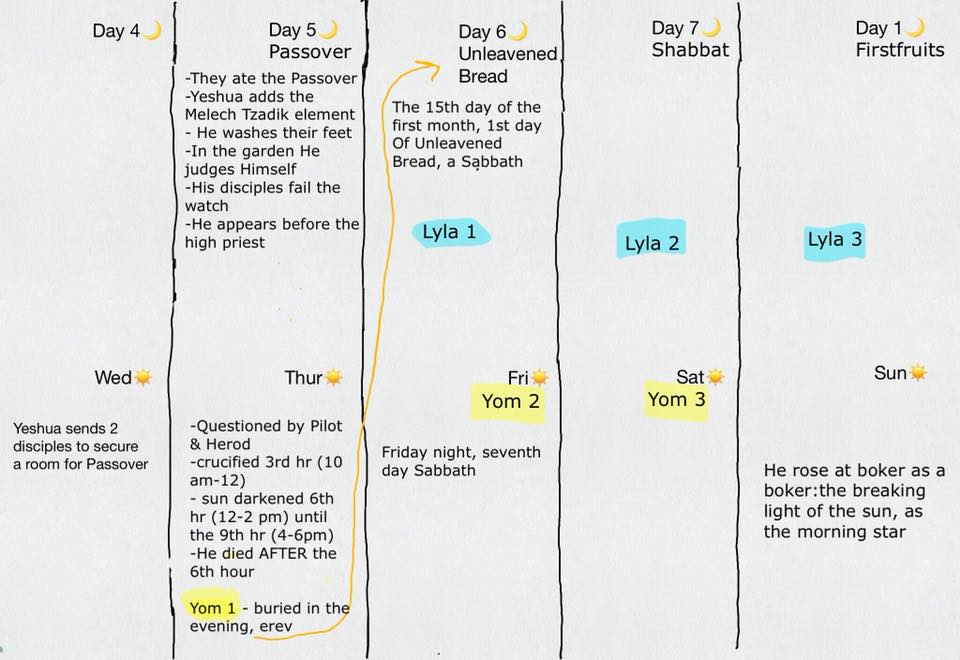 I had always observed Passover on the night of the 15th. I believed that the 14th was only mentioned as a preparation day.
Last year I became unsure of what I had been doing. This year I believe I have received clarity on which was the intended day for the Passover Sacrifice.
Between the evenings
Some of you have been in the group from the beginning. And youâve been through a couple of Passover seasons with me. It because of you who have known what Iâve done in the past that I post this change in my schedule regarding how I will keep the Passover and the week of Unleavened Bread this year.
I have a new understanding of âbetween the eveningsâ after finishing Hebrew language classes (ulpan). Last year it didnât click for me, it was probably too soon after finishing the class and I needed to settle in with the ebb and flow of my surrounding a little more. But Iâve have been able to use the skills Iâve learned with Biblical Hebrew as well not just in the supermarket. It is what helped me understand the term âbetween the eveningsâ.
××× ×ער××× â Between the evenings
Hebrew names are nouns, but they are also adjectives because the noun describes something about the person or place. Here are some examples:
Elijah or ××××× is a compound of the words El or God and Yehovah ××××
Naomi or × ×¢×× means pleasant, which is why she said to call her Mara (bitter) in Ruth 1:20
Yashua or ×ש××¢ means Yah Saves.
We could continue to build our list but you get the point.
Here is also an example of how words are built from a root word or parent word.
The word for bread is ××× and the word for war is ××××. When a root word is preceded by an × it indicates the prefix âfromâ. War takes âfrom breadâ because all the men, the farmers, the bread producers go off to war. Itâs a biblical theme that wars were fought in the first month of the year, which is the month of the aviv barley. Since barley was the principle bread in ancient Israel and the harvest begins in the first month, it is easy to see why the word for war means âfrom breadâ ××××.
Another example is the word guard ש×ר. The temple priests were considered to be guardians of the temple of ××××. They were responsible to keep the lamp lit, to offer the twice-daily incense, and the twice-daily sacrifices. They guarded the work of the temple. In Chronicles when we read about the priestly courses, the divisions of the priestly work; the Hebrew word is ×ש×ר, which literally means âfrom the guardsâ.
There are other suffixes and prefixes that are used, but I only wanted to give you a basic idea of how words are built.
In the first list of names: Elijah, Naomi and Yeshua; each are examples of proper names of people, they each also describe something. Which brings me to: ××× ×ער×× â Between the evenings.
Elohim gave us a Hebrew noun called erev or evening in English, but erev also describes something, erev is also an adjective; it describes the process of mixing or crossing over. ×¢×¨× is a root word; the root of ×¢×¨× is .×¢.ר.× from this root fifteen Hebrew word are built or born:
⢠Mixing without being integrated
⢠Darkening
⢠Being pleasant
⢠Being between lender and borrower
⢠Evening; mixing shades of light
⢠Twilight
⢠Rabble, mixed multitude (Arab)
⢠Desolate plain
⢠Wild desert beasts
⢠Raven, wilderness bird
⢠Wilderness with haphazard growth
⢠Woof; horizontal weave
⢠West; sunset
⢠Willow; vegetation grown in wilderness
⢠Bartered merchandise
Ex 12:6 And you shall keep it to the fourteenth day of the same month: and the whole assembly of the congregation of Israel shall kill it (in the evening ××× ×ער××)
They were to slay the Passover lambs between the evenings, or between the erevim. One hard rule I applied here with my understanding of the scripture is that a 24-hour day only has one evening or erev. In Genesis one we are told the evening and the morning (in this order) were the first day.
According to the scripture, the fourteenth day can only have one erev. Erev begins the day or the position in the 24-hour day for the noun erev is at the beginning of the 24 hours.
When looking at Ex 12:6 if we use the word erev as an adjective we can see the answer to this puzzle of how can the fourteenth day can have two erevim.
The noun erev has two mixings or crossing overs (two erevim). The first mixing or crossing over is when daytime is mixing with darkness and it is no longer daytime, daytime has crossed over into the time of the day called erev and it is now the beginning of erev. This is the first mixing or crossing over of the adjective erev.
The second mixing or crossing over is when the noun erev is mixing with night time, erev has given way to the night. It is now the end of erev and has become night. This is the second mixing or crossing over of the adjective erev.
Exactly what is happening in the middle of (or between) the span of time named erev? The sun sets, halfway through the sun slips below the horizon. The lambs were slain at sunset at the beginning of the fourteenth day. Elohim was giving them an exact time for the slaying of the lambs. Remember the order we are given in Genesis, that a day can only have one erev and a day begins with erev.
Genesis 1:5b And the evening (erev) and the morning were the first day.
While the priests in the New Testament seemed to have lost this timing in their order of the aviv feasts, it seems todayâs priests may understand what they lost. When I was at the Pesach sacrifice practice and asked what time the actual sacrifice would take place the response was âas soon as the sun is setâ!
It is because of this understanding of the adjective and noun system in Hebrew words I can finally see the Lordâs Supper was Passover. Itâs not a surprise to me that the Jews who broke the Law would lose the date that they were to keep the Passover on. Thatâs why the Messiah had to come; they had broken the Law, the covenant. He died for their broken covenant in their broken system of keeping the Law (the covenant).
Ex 12:42 It is a night to be much observed (observance, guard) unto the LORD for bringing them out from the land of Egypt: this is that night of the LORD to be observed of all the children of Israel in their generations.
Deut 16:7 And thou shalt roast and eat it in the place which the Lord thy God shall choose: and thou shalt turn in the morning, and go unto thy tents.
The night of the fourteenth is to be a watch night. In Egypt, the Israelites had been waiting with their loins gird, their shoes on their feet, and their staff in their hand. They had been the servant or slaves in Egypt. While Egypt was a real event and a real location it also represents the bondage of sin.
Exodus 12:11 And thus shall ye eat it; with your loins girded, your shoes on your feet, and staff in your hand; and ye shall eat it in haste: it is the Passover of ××××
The Messiah ×ש××¢ came as a servant to redeem the lost.
The night of the Lordâs Supper was Passover. Luke 22:15 And he said unto the, With desire I have desired to eat this Passover with you before I suffer.
After the midnight Passover meal and after the Melech Tzadik bread and wine He took off his clothes and put on the towel around his loin. He had come as a servant to do the work of redemption, but at this moment He embodied the slaves that the Israelites had been in Egypt when He girded His loin with a towel and washed their feet.
John 13:4 He riseth from supper, and laid aside his garments and took a towel and girded himself. 18 And he poureth water into a basin and began to wash the disciple’s feet, and to wipe them with the towel wherewith he was girded.
Our Messiah laid down His position as a direct inheritor of our Father in heaven (Heb 1:4; Phil 2:6-8) and willingly entered Jerusalem (Rev 11:8 which is spiritually Sodom and Egypt) and placed Himself as a servant to humanity for their redemption.
Was it a symbol of how we are to treat each other as well? Absolutely. John 13: 35 By this shall all men know that ye are my disciples, if ye have love one to another. Being the example that we are to desire to achieve His level of excellence, His level of maturity. He also said: John 15:13 Greater love hath no man than this, that a man lay down his life for his friends
On the night of the 14th, after the midnight Passover meal, after His first Melech Tzadik act of the bread and wine, and after His perfect example of making himself a slave and a servant to demonstrate perfect love Yeshua continued to keep the watch of the 14th night: is a night to be much observed unto the LORD for bringing them out from the land of Egypt. He was preparing to deliver His people from spiritual Egypt, that is slavery to sin.
The watch of the 14th night in the garden:
Matt 26:38 Then saith he unto them, My soul is exceeding sorrowful, even unto death: tarry ye here and watch with me. 40 And he cometh unto the disciple, and findeth them asleep, and saith unto Peter, What, could ye not watch with me one hour? 41 Watch and pray, that ye enter not into temptation, the spirit indeed is willing but the flesh is weak.
Deut 16:10bâ¦and thou shalt turn in the morning, and go unto thy tents. The watch was to end at sunrise, but not before Peter denied the Messiah three times when the rooster crows at sunrise.
Matt 26:75 And Peter remembered the word of Jesus, which said unto him, Before the cock crow, thou shalt deny me thrice. And he went out, and wept bitterly.
I want to show you one more thing. Remember that it is my belief that the Messiah died for their lawlessness or their sin which is missing the mark and He did it in their twisting of the Law.
The symbol of dying at sunset which is the way the Law was given to Moses, represented that the fullness of Elohim (Col 1:19), the exact likeness of Elohim (Col 1:15-17), the Son of ×××× was dying in the symbol of the sun was setting. I will never look at a sunset in the same way again. It will always be a reminder to me of the death of my Messiah. But just look how the heavenly Father would not let them negate the point it represents.
Mark 15:33 And when the sixth hour (10:00 am – 12:00) was come, there was darkness (shadiness, obscurity) over the whole land until the ninth hour (4-6 pm).
The lamb was to be slain in erev, Elohim provided the erev for His Lamb. From the height of the sunâs zenith until the true erev at 5-6 pm when the light is mixing with the dark which is the true erev, Elohim created the erev. I believe the Messiah Yeshua gave up His spirit at the setting of the sun on the 15th day of the month of the aviv. Mark 15:35-37 doesnât say that ×ש××¢ immediately gave up his spirit when at the thrid hour He cried out to ××××. In fact, the guard’s statement could imply a season of waiting for His final breathe. Again, it is my personal belief that his final breathe coincided with the setting of the sun.
Today in the month of the aviv in Israel, if I throw out daylight saving time, the sun will set a little before 6 p.m.
Itâs interesting to me that as Noah was a type of the Son of Man who was perfect in his generation, he was in the ark in the second month Passover. Yeshua the Son of Man was perfectly sinless. That Hezekiah as a type of a Righteous King cleansed the Temple and kept a second month Passover. Yeshua cleansed the Temple in the week before His death. And that the Messiah at his death died on the Second Day, the wrong day. He was offered at the wrong time of day but the Father created erev for His sacrifice. He died for their sin and in their sin to redeem them from their sin.
Please use the private chat if you have questions or comments.Updated Mar 29, 2018, 3:13 PM
Mar 29, 2018, 11:49 AM – Becca Biderman shared a post to the group: In search of His ancient and true path …from cover to cover.
Updated Mar 29, 2018, 11:49 AM
Mar 29, 2018, 11:38 AM – Becca Biderman shared a post to the group: In search of His ancient and true path …from cover to cover.
Updated Mar 29, 2018, 11:38 AM
Mar 29, 2018, 11:37 AM – Becca Biderman shared a post to the group: In search of His ancient and true path …from cover to cover.
Updated Mar 29, 2018, 11:37 AM